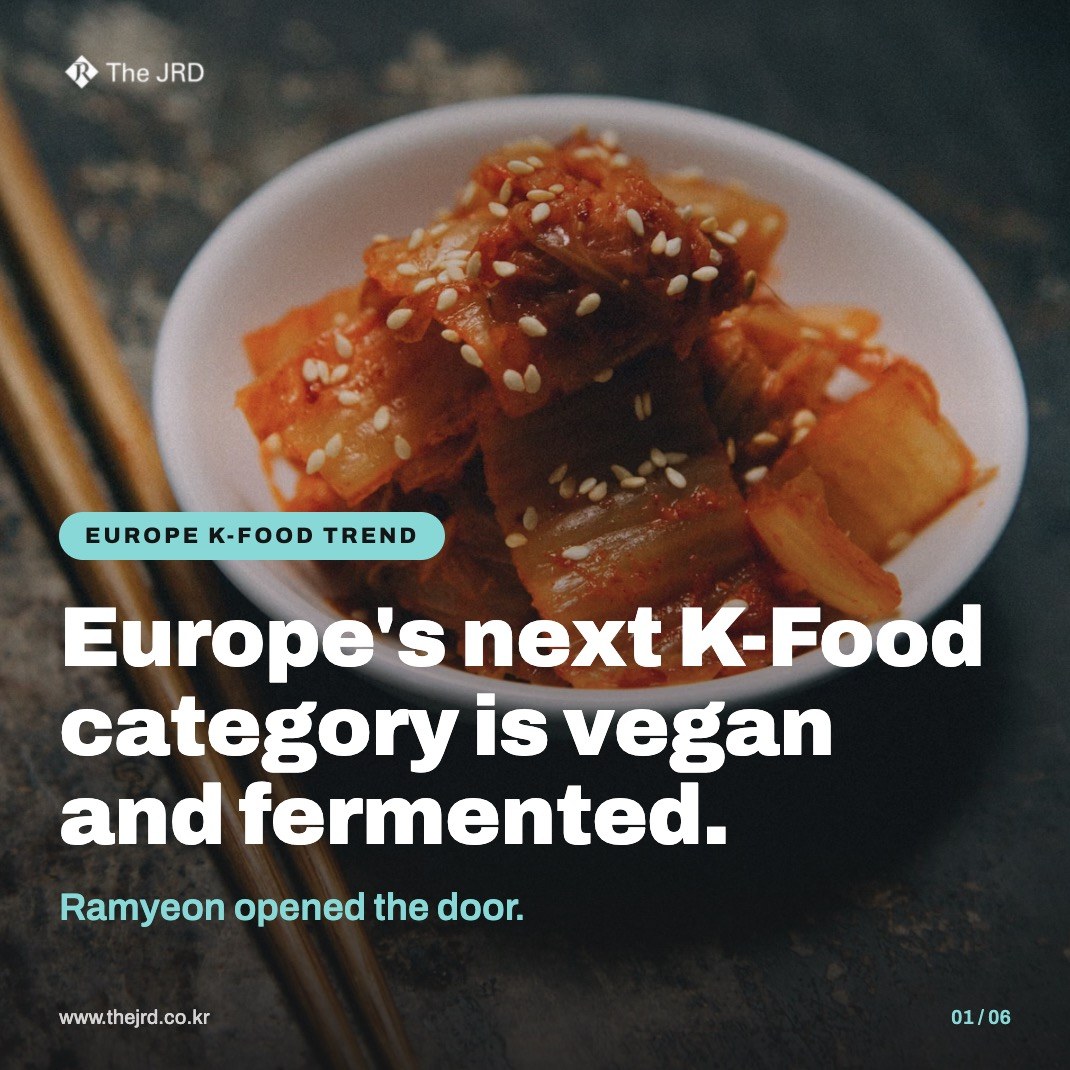
Ramyeon opened the door to Europe. The category walking through it next looks different: vegan and fermented Korean food, moving from trade-show showcase to actual shelf listings.
Europe's plant-based market is worth EUR 4.75 billion across six major markets, according to GFI Europe and Circana data for 2024. It is a mature aisle, which changes what buyers want: differentiation rather than another soy burger.
Because it is naturally plant-based rather than engineered to be. Kimchi, gochujang, and doenjang are fermented vegetable and soy products with their own flavour identity, so they answer the differentiation question without a meat-analogue positioning.
Yes. At K-Food Fair Frankfurt 2026, 55 buyers from 19 countries held 583 buyer meetings, according to MAFRA and aT. That is a buying delegation, not a consumer showcase.
Vegan kimchi replaces marine ingredients such as fish sauce and salted shrimp with plant-based alternatives, and glass jars extend shelf life for the longer European supply chain. Both changes are about clearing listing requirements rather than changing the eating experience.
Kimchi exports reached USD 163.6 million in a record 2024, and 2025 stayed on record pace, per MAFRA and Korea Customs Service. Europe drove much of that growth, which is why European listings are the leading indicator to watch.
Vegan and fermented K-Food is moving from showcase to shelf, and the first listings are being placed now. The sourcing question is which Korean producers already hold vegan certification, EU labelling, and glass-jar packing at volume.
Traditional kimchi usually contains fish sauce or salted shrimp, so it is not. Vegan kimchi replaces those with plant-based ingredients and is the version being listed in Europe.
Glass extends shelf life and handles the pressure changes of a long fermented-product supply chain better than pouches, which matters for retail listings measured in months rather than weeks.
Growth is concentrated in the six major plant-based markets tracked by GFI Europe, with Germany and the Netherlands acting as the main entry points for Korean food shipments.

