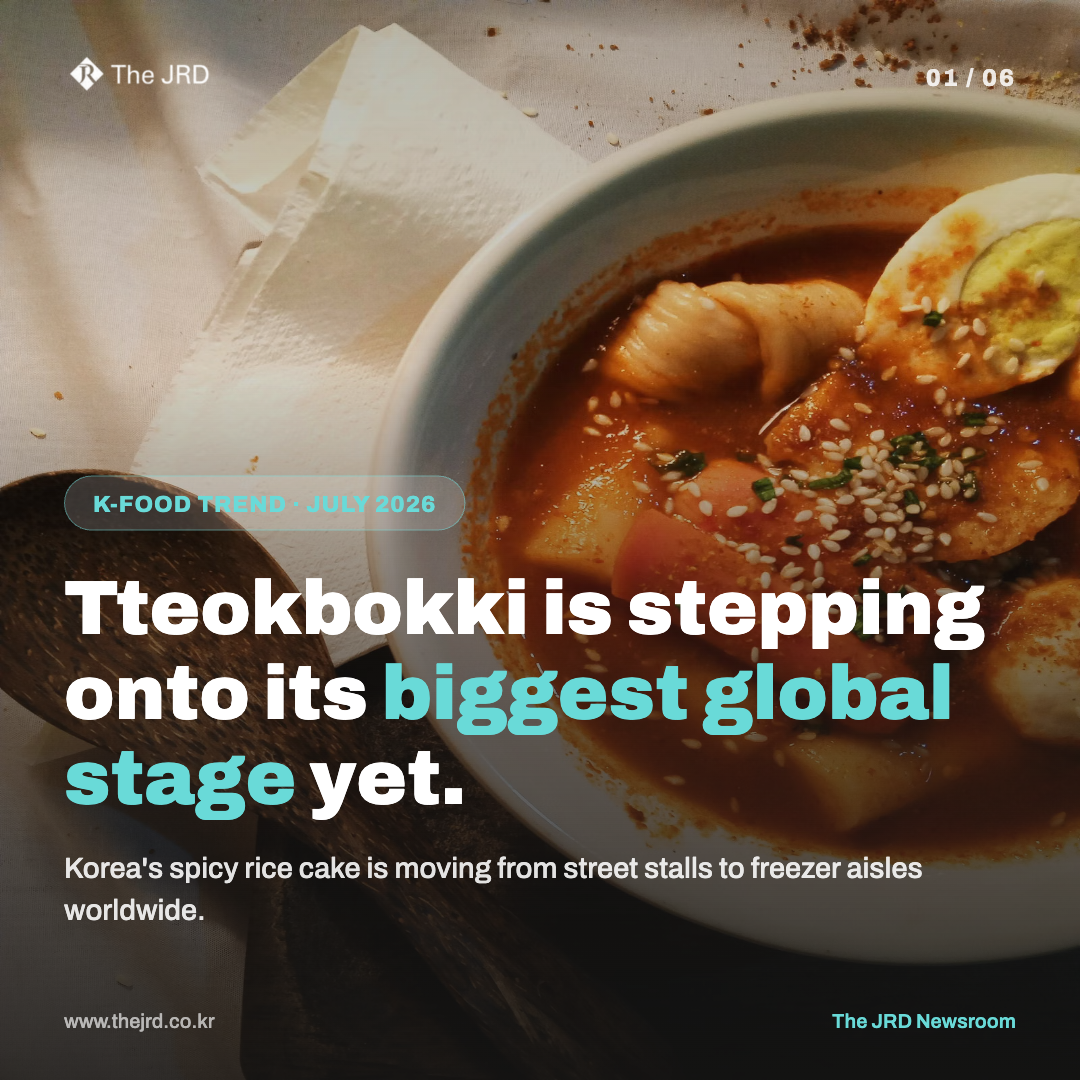
Korea's spicy rice cake is moving from street stalls to freezer aisles worldwide. Tteokbokki has followed ramyeon and kimbap onto Western shelves, and the export numbers show the shelf is already responding.
Korean rice cake exports reached a record $91.4 million in 2024, nearly tripling the 2019 figure of $34.3 million, according to MAFRA. Tteokbokki is the product driving that growth.
The United States is the largest buyer at $34 million, followed by the Netherlands at $8 million and Vietnam at $6.7 million. The Netherlands matters out of proportion to its size because it is Europe's main landing point for Korean food shipments.
Three, and each sits on a different shelf. Yopokki instant cups sit in Walmart's ambient aisle; bibigo pantry packs and frozen pouches are available at Costco; Pulmuone chilled packs line H Mart's refrigerated cases. A category that can fill ambient, frozen, and chilled at once is a category retailers can plan around.
Yes. Cheese and rosé variants are widening the audience beyond the spicy original. Instant formats hold the largest share of the category, according to Spherical Insights.
Ramyeon passed $1.52 billion in exports and proved the demand. Frozen kimbap filled the freezers and proved rice-based Korean food could hold mainstream shelf space. Tteokbokki is the next rice-based dish with the same retail logic behind it.
Tteokbokki is no longer a single-format novelty. Sourcing decisions now have to cover ambient, frozen, and chilled lines from suppliers that can hold national-account volumes and compliance, not one-off shipments.
A Korean dish of chewy rice cakes in a spicy sauce, traditionally street food, now sold internationally in instant, frozen, and chilled retail formats.
Yopokki instant cups at Walmart, bibigo pantry packs and frozen pouches at Costco, and Pulmuone chilled packs at H Mart.
The rice cakes themselves are rice-based rather than wheat-based, which is part of why the category travels; sauces and specific products vary, so labelling should be checked per SKU.

