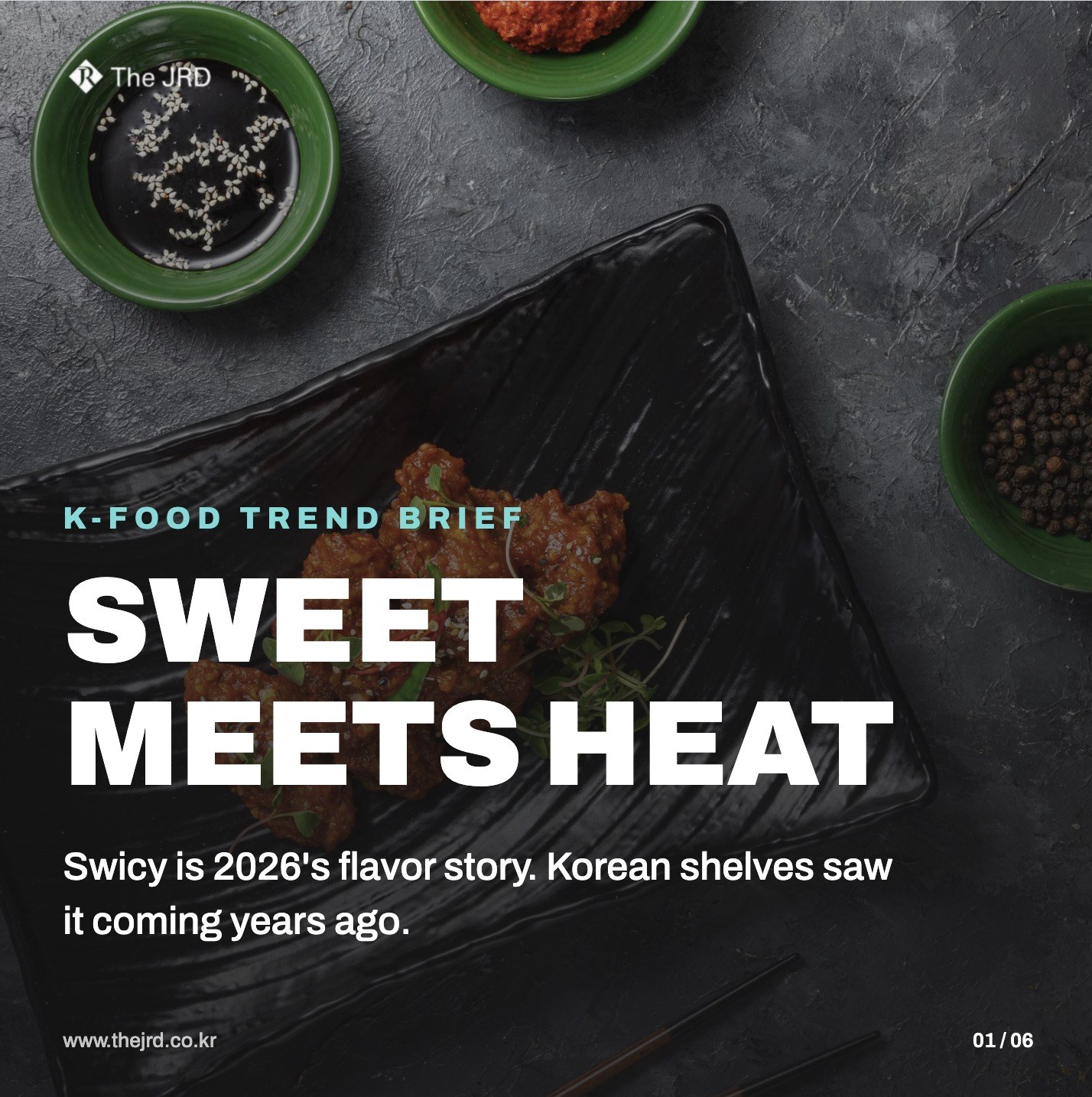
Sweet meets heat. Swicy is 2026's flavour story in the United States, and Korean shelves saw it coming years earlier. The sequence matters, because what wins in Korea's aisles has a habit of reaching Western shelves next.
Swicy is sweet plus spicy in one bite: a chilli heat carried by sugar, honey, or cream rather than served neat. Hot honey is the clearest US example, and 11.3% of US menus now carry it, up about 230% in four years, according to Datassential.
In 2014, Honey Butter Chips put sweet on a savoury snack and sold out nationally, with resale prices running multiples of retail. The mashup playbook started with sweet. In 2017, Buldak Carbonara balanced extreme heat with cream. That year the Buldak Bokkeummyeon line as a whole grew to more than 85% of Samyang's exports. After sweet came the pairing.
US gochujang launches grew 120% in 12 months, according to Kerry's 2026 Global Taste Charts, which also rank bulgogi No.4 among the fastest-growing meat and meal flavours. It is the ingredient that delivers swicy without a formulator having to build the balance from scratch.
Korean ramyeon exports reached $1.52 billion in 2025, and Buldak led that run. The flavour profile that scaled in Korea's own aisles is the one now scaling abroad, which makes Korean shelf data an early indicator for Western product development rather than a separate market story.
Swicy is not one SKU; it is a flavour system that spans snacks, sauces, noodles, and proteins. Sourcing gochujang or a Korean sweet-heat base from a manufacturer that already runs it at export volume is faster than reformulating heat and sweetness in-house.
Food that combines sweetness and chilli heat in the same bite, such as hot honey, gochujang glazes, and sweet-spicy fried chicken.
Both. Gochujang is a fermented chilli paste whose fermentation produces sweetness alongside heat, which is why it delivers a balanced swicy profile in one ingredient.
Korean retail tests flavour mashups at scale first, and the formats that survive there are the ones Korean manufacturers then export, so US shelves see the winners rather than the whole field.

