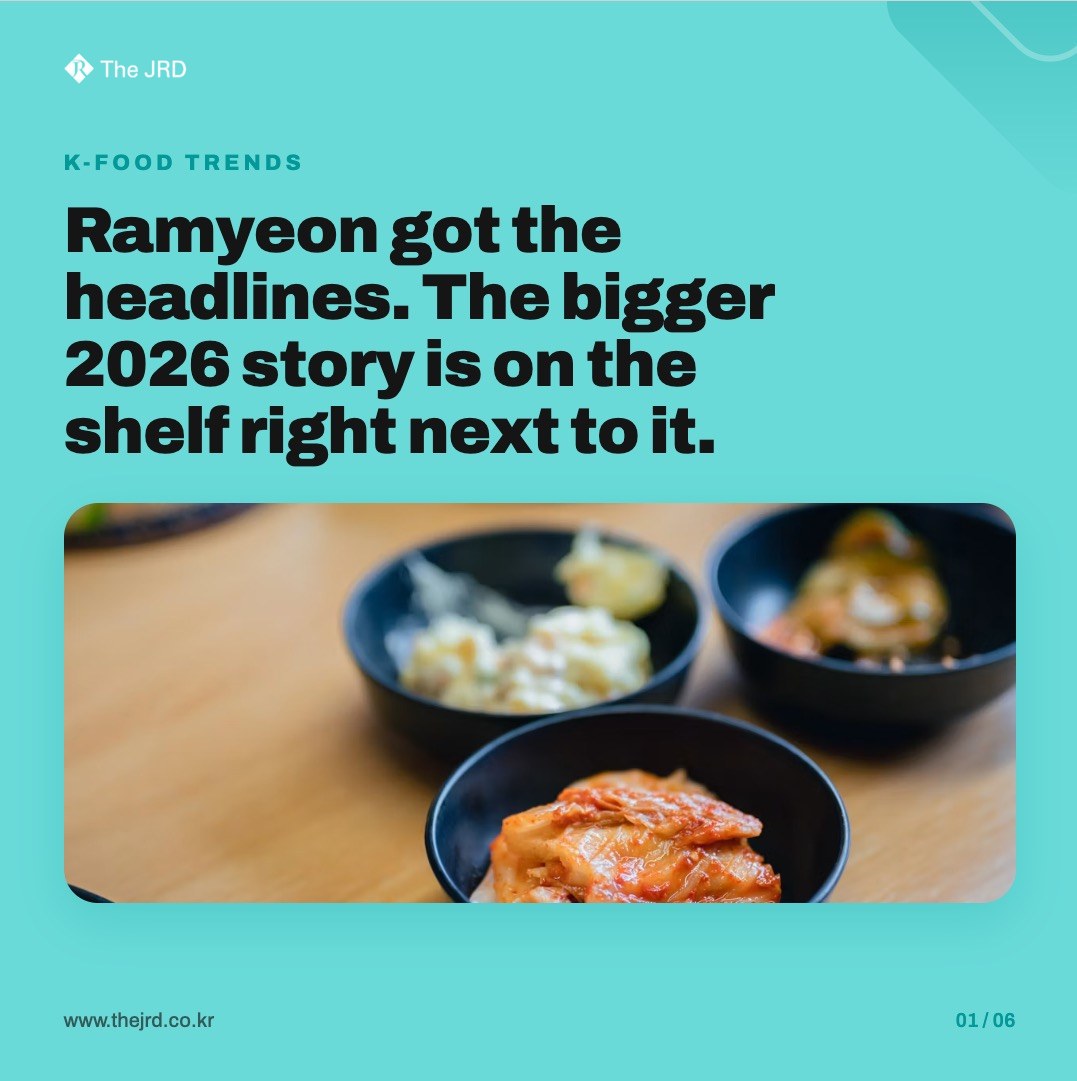
Ramyeon made the headlines in 2025. The bigger 2026 story for K-Food is the rice-based category moving onto the shelf right next to it: kimbap, tteokbokki, and makgeolli are leaving the specialty aisle for everyday grocery, and the reason is structural.
Korean ramyeon exports reached $1.52 billion in 2025, up 21.8% year on year, making it the first Korean food category to pass $1 billion. China grew 47.9% to $385 million and the United States reached $255 million, according to Korea Customs Service data.
Rice-based Korean foods are following ramyeon, and faster. Kimbap, tteokbokki, and makgeolli exports grew 41.4% in the first half of 2024, with shipments to the United States up 60.7%. Ramyeon proved the demand; rice-based products are the category taking the shelf space that demand opened.
Frozen kimbap has reached major US retailers including Costco. It is rice-based, ready to eat, and stable in the freezer, which is what a mainstream retailer needs to justify permanent shelf space rather than a seasonal trial.
Rice clears a dietary barrier that wheat-based foods do not. Gluten-free positioning puts these products in front of shoppers who had never bought Korean food before, so the rice base is the structural reason the category crosses over rather than a marketing choice.
Korea is targeting $16 billion in food exports for 2026. The direction of travel is an everyday-shelf category rather than a specialty one, which changes what buyers need from suppliers: consistent volume, compliance, and replenishment rather than one-off novelty shipments.
Ramyeon, at $1.52 billion in 2025. It is the first Korean food category to pass $1 billion in annual exports.
Products whose main ingredient is rice rather than wheat, including kimbap, tteokbokki, and makgeolli. As a group they grew 41.4% in the first half of 2024.
Rice-based products are naturally gluten-free, which opens them to shoppers who avoid wheat and who would not otherwise have bought Korean food.

