Korean Food Labeling Is Regulatory Review, Not Translation

When a food product crosses a border, the most careful groundwork happens long before it ships — at the registration and labeling stage. For enterprise buyers building cross-border food programs, this is where projects quietly succeed or stall.

What we saw at Seoul Food 2026

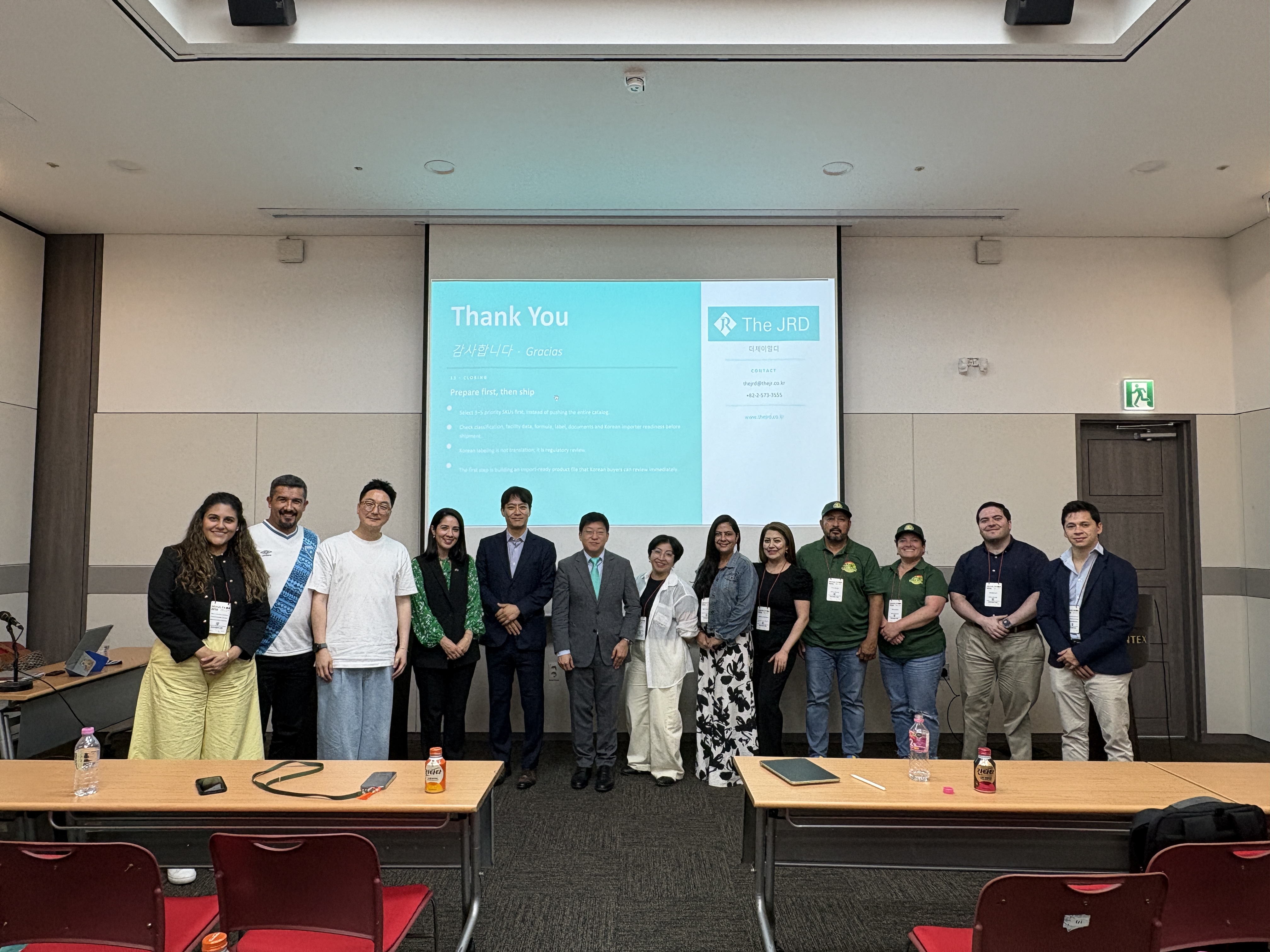
At this year's Seoul Food international exhibition at KINTEX, The JRD held a session — at the Guatemalan delegation's request — for companies preparing to move products across the Korea border. The group included exporters in coffee, cacao and chocolate, and tableware.

Our CEO Seungjo Han, a licensed Korean customs broker, walked through food import registration, the documents to prepare before shipment, and how labeling requirements are reviewed. His core point is one we repeat to every buyer we work with: Korean labeling is not translation. It is regulatory review — and it belongs to the preparation that happens before a product ships, not after.

Why this matters for sourcing K-Food

Most delays in cross-border food sourcing are not manufacturing problems. They are compliance problems discovered too late — an ingredient that needs reclassification, a label claim that fails destination-market rules, a document missing at customs.

That is exactly why, at The JRD, regulatory affairs and customs clearance are not outsourced. Licensed customs attorneys and RA experts sit inside our process and screen for compliance at the development stage, including:

  • Formulation review and ingredient screening
  • Destination-specific labeling and claim review
  • FDA FSVP, HALAL, and Vegan pathways where the buyer's market requires them

Mapping the regulatory stage early is where The JRD's end-to-end approach begins — and it carries through sourcing, product development, factory-controlled manufacturing, and distribution.

The takeaway for buyers

If you are sourcing Korean food and beverage at retail scale, treat labeling and registration as a regulatory milestone, not a final formatting task. Handled in-house and early, it removes the single most common cause of stalled shipments.

Our thanks to the Guatemalan delegation and to the buyers and partners building cross-border food programs with us.