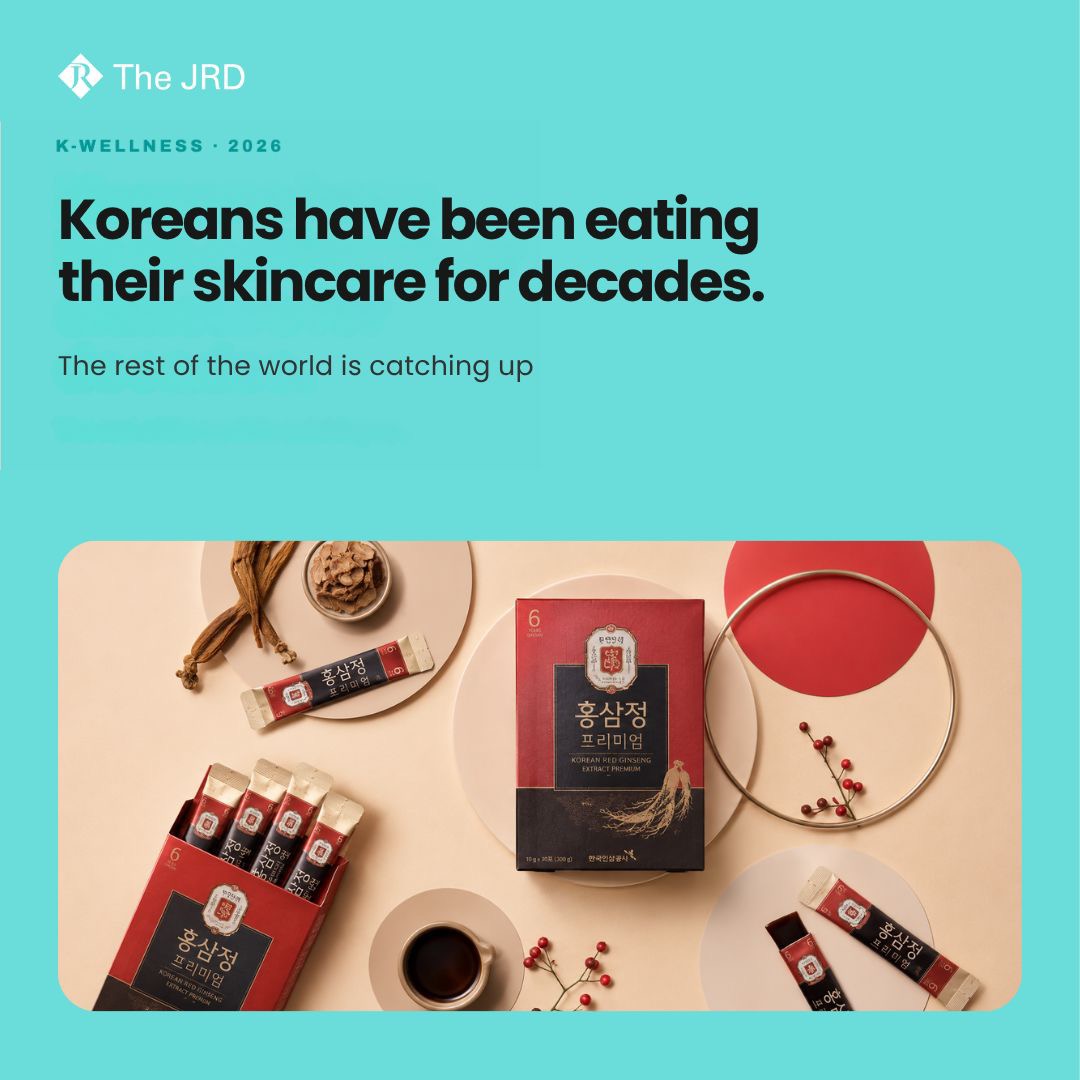
Koreans have been eating their skincare for decades. The rest of the world is just catching up, and the reason Korea is positioned to supply that demand is a production base that was built for export long before the trend arrived.
Korea's health functional food market, the MFDS-certified category, was worth KRW 5.96 trillion, about $4.3 billion, in 2025, according to the Korea Health Supplement Association. The market has more than doubled over the past decade but has been flat since 2022. What has not stalled is the manufacturing base behind it: it is export-ready, so scaling abroad does not require new capacity or new certification work.
Korean manufacturers did not follow global QA standards; they built infrastructure that many buyers now treat as the benchmark. For a sourcing team, that shortens qualification: the documentation, testing, and traceability a Western retailer asks for already exist in the plant.
Gummies are gaining on capsules, growing at roughly 10% CAGR through 2033 according to SNS Insider. Korean manufacturers moved into gummy formats early and now compete on flavour, texture, and dosing precision rather than on ingredient claims alone.
Pulled. The category is no longer being pushed onto retailers; buyers are asking for Korean functional food by name. Retailers are fielding requests, and Korean ingredients have crossed from niche to expected on a wellness shelf.
The supply chains built in Korean functional food today will determine who leads the category. Scale, formulation capability, and QA are already in place; the open question is which buyers lock in capacity before the shelf fills.
Products formulated for a specific health benefit and regulated as functional food in Korea, including red ginseng, collagen, probiotics, and vitamin formats such as capsules, powders, sticks, and gummies.
The sector more than doubled over the past decade, building export-ready capacity, and manufacturers invested in QA infrastructure ahead of demand rather than in response to it.to it.
Gummies, which are gaining share on capsules at roughly 10% CAGR through 2033.

