A staff recipe contest at one US retailer is a small thing. What it points at is not: Korean sauce exports set a record in 2025, and four Korean manufacturers are entering the category in four different formats.
Korean sauce exports reached a record $417.7 million in 2025, up from $321.9 million in 2020, according to the Korea Customs Service. Exports to the US alone reached $92.2 million in 2025, up 5% from the year before, and shipments to Japan rose 128.5% in the first half of the year.
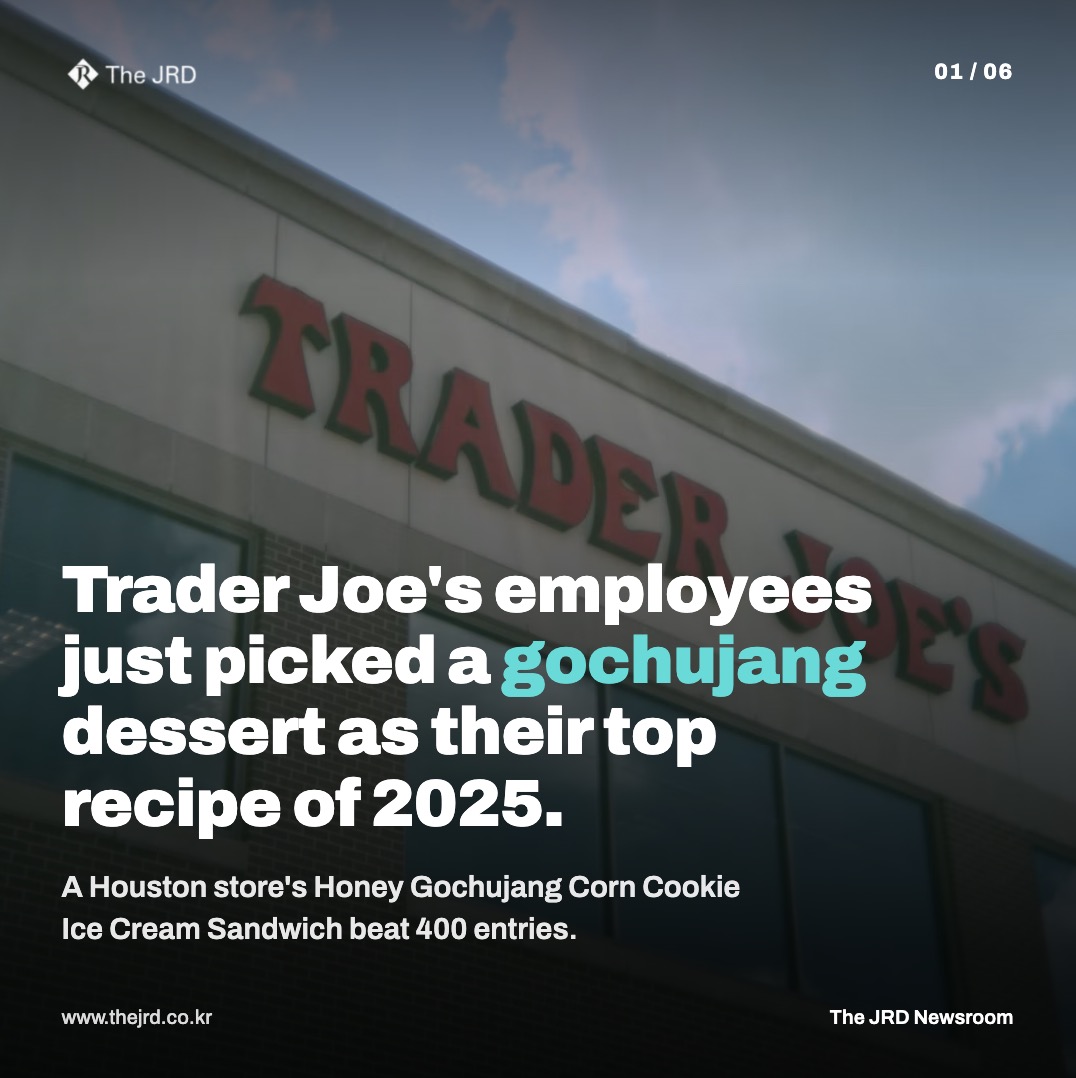
Trader Joe's employees crowned a Honey Gochujang Corn Cookie Ice Cream Sandwich, submitted by a Houston store, the winner of its 2025 Store Recipe Contest, beating out roughly 400 entries from stores nationwide. It is a small but telling signal: Korean sauces, gochujang among them, are becoming a flavor Trader Joe's own staff reach for when they want to stand out, not just a specialty-aisle ingredient shoppers seek out on their own.
Samyang Foods, CJ CheilJedang, Daesang, and Dongwon Home Food are each taking a different route into the same growing category, rather than one format winning out. Samyang is extending its Buldak brand from ramyeon into sauces, backed by a Times Square ad, a Coachella festival partnership, a menu collaboration with Panda Express, and the acquisition of sauce manufacturer G&F. CJ CheilJedang is packaging gochujang in tube format for everyday dressing and dipping use and promoting K-BBQ sauce as a drizzle. Daesang's O'Food line includes a kimchi spread, kimchi ketchup, and kimchi mayo. Dongwon Home Food's Vivid Kitchen line sells a kimchi chipotle mayo and, more recently, a kimchi salsa at Sam's Club.
The phrase has come up in Korean food industry commentary to describe Korean sauces broadly, gochujang chief among them, as a foundational ingredient other cuisines build on top of, rather than a finished product like ramyeon or kimchi. The comparison lines up with the export data: sauce was Korea's third-fastest-growing K-Food+ export category in 2024, up 18.4% year on year, behind only instant noodles (up 24.0%) and ice cream (up 23.1%).
Korean pop culture is adding momentum to a trend that was already building. Netflix's 2025 animated hit KPop Demon Hunters put ramyeon and tteokbokki in front of a global audience, and recipes built around Korean sauces have circulated widely on social media since, alongside the broader spread of Korean restaurants and home cooking content.
A flavor that reaches a mainstream retailer's own staff, a widening export record, and four Korean companies each testing a different format all point the same way. Gochujang may be leading the charge, but Korean sauce broadly is moving from a single ingredient shoppers seek out toward a fragmented, fast-growing category, with more entry points than a single finished product like ramyeon, and no single format buyers can simply copy.
Trader Joe's employees chose a Honey Gochujang Corn Cookie Ice Cream Sandwich, submitted by a Houston store, as the winner of its 2025 Store Recipe Contest, beating roughly 400 entries from stores nationwide.
Korean sauce exports reached a record $417.7 million in 2025, up from $321.9 million in 2020, according to the Korea Customs Service.
Samyang Foods, CJ CheilJedang, Daesang, and Dongwon Home Food are each pursuing different strategies, including brand extensions, tube-format convenience products, and Korean-global fusion condiments.

